Blog
Structural Steel S235, S275 and S355 – comparison of steel grades


Structural steel grades explained
Structural steel is one of the most important materials used in modern construction. It is used in industrial buildings, warehouses, agricultural structures, bridges, platforms, frames, supports, beams, columns and many other load-bearing applications.
Among the most commonly used structural steel grades in the UK and across Europe are S235, S275 and S355. These grades are defined under the European structural steel standard EN 10025, which covers hot-rolled products of structural steels. The letter “S” stands for structural steel, while the number refers to the minimum yield strength in megapascals for material up to 16 mm thick. For example, S355 has a minimum yield strength of 355 MPa for that thickness range.
Although these grades may look similar at first glance, they differ in mechanical strength, typical applications and suitability for specific types of structures. Choosing the right grade is important for safety, cost control and long-term performance.
What do S235, S275 and S355 mean?
The names of these steel grades are not random. They describe the mechanical performance of the material.
| Steel grade | Meaning | Minimum yield strength* |
|---|---|---|
| S235 | Structural steel | 235 MPa |
| S275 | Structural steel | 275 MPa |
| S355 | Structural steel | 355 MPa |
*For nominal thickness up to 16 mm. Yield strength may reduce as material thickness increases.
In simple terms, yield strength tells us how much stress the steel can withstand before it begins to deform permanently. The higher the yield strength, the stronger the steel grade.
This means that, under comparable conditions, S355 is stronger than S275, and S275 is stronger than S235. However, the strongest grade is not always automatically the best choice. The correct grade depends on the design, load requirements, span, connection details, fabrication process and project budget.
S235 structural steel
S235 is a general-purpose structural steel grade. It is often used where high strength is not the main requirement and where the structure is relatively light or moderately loaded.
Typical uses of S235 include:
- light steel frames,
- brackets and supports,
- secondary steelwork,
- smaller platforms,
- non-critical structural elements,
- general fabrication,
- some architectural and workshop applications.
S235 is valued for its good formability and weldability. Because it has a lower yield strength than S275 and S355, it may require larger or heavier sections to carry the same load. For this reason, it is not always the most efficient option for larger load-bearing structures.
S235 can be a good choice when the design does not require high strength and when ease of fabrication is important.
S275 structural steel
S275 is stronger than S235 and has historically been widely used in general construction. It offers a balanced combination of strength, availability and workability.
Typical uses of S275 include:
- beams,
- columns,
- frames,
- lintels,
- base plates,
- structural supports,
- medium-duty steelwork,
- commercial and industrial structures.
S275 is often selected where S235 may not provide sufficient strength, but where S355 is not necessary. It is a practical middle-ground grade for many construction and fabrication projects.
In many cases, S275 offers sufficient strength for secondary or moderately loaded elements. However, for larger spans, heavier loads or more demanding structural designs, S355 is often preferred.
S355 structural steel
S355 is a high-strength structural steel grade commonly used in construction, engineering and industrial projects. With a minimum yield strength of 355 MPa for material up to 16 mm thick, it provides significantly higher strength than S235 and S275.
Typical uses of S355 include:
- primary structural frames,
- portal frame buildings,
- industrial halls,
- warehouses,
- bridges,
- heavy-duty beams and columns,
- crane-supporting structures,
- long-span steelwork,
- load-bearing platforms,
- high-strength structural components.
The key advantage of S355 is that it can allow engineers to design lighter structures compared with lower-strength steel grades. In some cases, using S355 may reduce the required section size or steel weight. This can help optimise material usage, transport, handling and installation.
However, the final choice must always be based on structural calculations and project specifications.
S235 vs S275 vs S355 – key differences
The main difference between S235, S275 and S355 is their yield strength.
S235 is the lowest-strength grade in this comparison. It is suitable for lighter structures and general fabrication. S275 provides higher strength and is often used in general structural applications. S355 offers the highest strength of the three and is commonly selected for more demanding load-bearing structures.
| Feature | S235 | S275 | S355 |
|---|---|---|---|
| Strength level | Basic | Medium | High |
| Minimum yield strength* | 235 MPa | 275 MPa | 355 MPa |
| Typical use | Light structures | General structural work | Heavy-duty and primary structures |
| Material efficiency | Lower | Medium | Higher |
| Common in major load-bearing frames | Less common | Common | Very common |
| Suitability for long spans | Limited | Moderate | High |
*For nominal thickness up to 16 mm.
Which steel grade should you choose?
The correct steel grade should be selected by a qualified engineer or according to the project specification. In construction, steel selection is not based only on price. It depends on several technical factors, including:
- the load the structure must carry,
- the span of beams or frames,
- the type of building,
- wind and snow loads,
- connection design,
- welding requirements,
- corrosion protection,
- fire protection requirements,
- fabrication method,
- availability of sections,
- compliance with relevant standards.
For smaller, lighter applications, S235 may be sufficient. For general building structures, S275 can be suitable. For industrial buildings, warehouses, portal frames and more demanding structural systems, S355 is often preferred because of its higher strength.
A common mistake is choosing steel only by price per metre or price per tonne. A higher-strength grade may sometimes reduce the total weight of steel required. This means the cheapest grade per tonne is not always the cheapest solution for the whole project.
Yield strength and tensile strength
Two important mechanical properties are often mentioned when comparing structural steels: yield strength and tensile strength.
Yield strength is the stress level at which steel begins to deform permanently. Once the material passes this point, it will not return fully to its original shape.
Tensile strength is the maximum stress the steel can withstand before breaking.
For structural design, yield strength is especially important because buildings and steel structures must remain safe and stable under working loads. The structure should not permanently deform during normal use.
Does higher strength always mean better steel?
Not necessarily.
S355 is stronger than S235 and S275, but that does not mean it should be used for every project. In some cases, S235 or S275 may be fully adequate and more economical.
Higher-strength steel may be beneficial when:
- loads are high,
- spans are long,
- the structure must be weight-efficient,
- section sizes need to be reduced,
- the project involves heavy industrial use.
Lower-strength steel may be suitable when:
- loads are relatively low,
- the element is secondary or non-critical,
- fabrication simplicity is a priority,
- the design does not require higher strength.
The best grade is the one that meets the design requirements safely and economically.
Weldability of S235, S275 and S355
S235, S275 and S355 are generally considered weldable structural steels. However, weldability depends on the full material specification, thickness, carbon equivalent, welding process and project requirements.
As strength and thickness increase, welding procedures may require greater control. For example, thicker sections may need preheating or specific welding procedures to reduce the risk of cracking.
For structural projects, welding should always follow the relevant fabrication standards and be carried out by qualified personnel.
Steel grade and section type
S235, S275 and S355 can be supplied in different structural forms, depending on availability and specification. These may include:
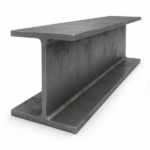
- universal beams,
- universal columns,
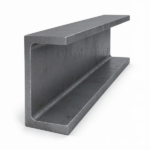
- channels,
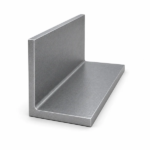
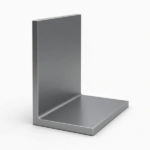
- angles,
- flat bars,
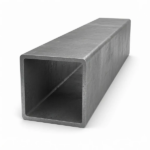
- square hollow sections,
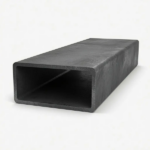
- rectangular hollow sections,
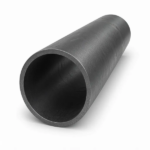
- circular hollow sections,
- plates,
- sheet material.
The steel grade tells you about the material strength. The profile type tells you about the shape and structural behaviour of the section. Both are important.
For example, an S355 universal beam and an S355 hollow section may have the same steel grade, but they will behave differently under load because their geometry is different.
Impact toughness: JR, J0 and J2
In addition to the main grade, structural steel may include suffixes such as JR, J0 or J2. These relate to impact testing temperature and toughness.
For example:
- S355JR
- S355J0
- S355J2
These suffixes are especially important where the steel structure may be exposed to low temperatures or dynamic loading. They should not be ignored when ordering steel. The correct suffix should match the project specification.
Practical examples
For a small support bracket or light secondary frame, S235 may be acceptable if confirmed by design.
For a standard commercial steel frame, S275 may be suitable depending on the loads, spans and engineer’s specification.
For a large industrial building, warehouse, portal frame or heavily loaded structure, S355 is often the more appropriate option due to its higher yield strength and greater material efficiency.
Common mistakes when choosing structural steel
One common mistake is assuming that all steel is the same. In reality, steel grade, profile type, dimensions, tolerances and certification all matter.
Another mistake is replacing one grade with another without approval. For example, substituting S355 with S275 may reduce the strength of the structure and create a safety risk.
It is also important not to rely only on visual appearance. Two steel sections may look identical but have different grades and mechanical properties. Material certificates are therefore essential for professional construction and fabrication work.
Why material certification matters
When buying structural steel, the buyer should make sure that the material is supplied with the correct documentation. Certification confirms the steel grade, chemical composition, mechanical properties and compliance with the relevant standard.
This is particularly important for:
- structural frames,
- public buildings,
- industrial facilities,
- bridges,
- safety-critical steelwork,
- projects requiring building control approval.
Using steel without proper documentation can create technical, legal and safety problems.
Summary: S235, S275 or S355?
S235, S275 and S355 are widely used structural steel grades, but they are not interchangeable without proper design approval.
S235 is suitable for lighter structures and general fabrication.
S275 offers higher strength and is widely used in general construction.
S355 provides the highest strength of the three and is commonly used for primary structures, industrial buildings and demanding load-bearing applications.
The right choice depends on the project specification, loads, structural design and fabrication requirements. For professional construction projects, the steel grade should always be selected by an engineer and supplied with the appropriate certification.
FAQ
What is the difference between S235, S275 and S355?
The main difference is yield strength. S235 has a minimum yield strength of 235 MPa, S275 has 275 MPa and S355 has 355 MPa for nominal thickness up to 16 mm.
Is S355 better than S275?
S355 is stronger than S275, but it is not automatically better for every project. It is better for applications where higher strength or reduced section weight is required.
Can S235 be used for structural work?
Yes, S235 can be used for structural work, especially in lighter or less demanding applications. The final decision should be based on structural calculations.
What does the “S” mean in S355?
The letter “S” stands for structural steel. The number indicates the minimum yield strength in MPa for material up to a specified thickness.
Which steel grade is best for a steel building?
For many industrial buildings, warehouses and portal frames, S355 is commonly used. However, the correct grade must always be confirmed by the structural design.
Can I replace S355 with S275?
No, not without approval from a qualified engineer. S275 has lower yield strength than S355, so replacing it may reduce the load-bearing capacity of the structure.