Blog
Most popular steel sections used in construction


Introduction
Structural steel forms the backbone of countless construction projects, from residential developments and commercial buildings to warehouses, agricultural facilities and large industrial complexes. While steel grades determine the mechanical properties of the material, the shape of the steel section plays an equally important role in how loads are carried and distributed throughout a structure.
Selecting the correct steel section affects the strength, stability, efficiency and cost of a project. Every profile has its own structural characteristics and is designed for specific applications.
This guide explains the most popular steel sections used in modern construction, their typical uses and the advantages each profile offers.
Why steel section selection matters
Choosing the right steel profile is about far more than finding a component that fits within the design. Engineers select structural sections based on numerous factors, including:
- structural loads,
- span length,
- compression and bending forces,
- connection details,
- fabrication requirements,
- installation methods,
- material efficiency,
- overall project cost.
Using an unsuitable profile may increase steel consumption, complicate fabrication or reduce structural performance. For this reason, profile selection is always part of the structural design process.
Universal beams
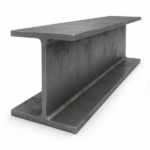
Universal beams, commonly referred to as UB sections, are among the most widely used structural steel profiles in the construction industry.
These sections are specifically designed to carry bending loads efficiently, making them ideal for horizontal structural members.
Typical applications include:
- floor beams,
- roof beams,
- portal frame structures,
- warehouse construction,
- mezzanine floors,
- industrial buildings,
- commercial developments.
Universal beams combine high strength with efficient material usage, allowing engineers to achieve long spans while maintaining structural stability.
Universal columns
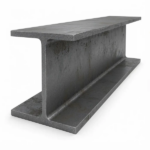
Universal columns, often known as UC sections, are designed primarily for vertical load-bearing applications.
Compared with universal beams, universal columns generally have wider flanges, giving them improved resistance to compression.
They are commonly used for:
- structural columns,
- steel frames,
- industrial buildings,
- office buildings,
- multi-storey structures,
- support systems.
In many steel frame buildings, universal beams and universal columns work together to create the primary structural framework.
Square hollow sections
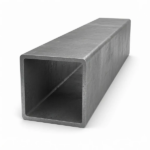
Square hollow sections, or SHS, are closed steel profiles with equal dimensions on each side.
Their symmetrical shape provides excellent resistance to torsion while also offering an attractive appearance. This makes them popular in both structural and architectural applications.
Common uses include:
- building frames,
- columns,
- canopies,
- architectural features,
- support structures,
- handrails,
- steel fabrications.
Because all four sides are equal, SHS sections provide consistent structural performance regardless of orientation.
Rectangular hollow sections
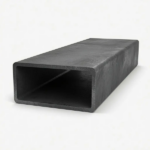
Rectangular hollow sections, known as RHS, are similar to square hollow sections but have different width and height dimensions.
This allows engineers to optimise the section depending on the direction of loading.
Rectangular hollow sections are frequently used for:
- structural frames,
- roof supports,
- floor systems,
- agricultural buildings,
- transport infrastructure,
- machinery supports.
Their closed profile also provides a clean appearance, making them suitable for exposed structural steelwork.
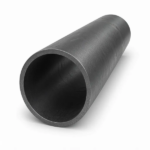
Circular hollow sections
Circular hollow sections, or CHS, are recognised by their round shape.
Their geometry provides excellent resistance to compression and torsional forces while creating a smooth architectural appearance.
Typical applications include:
- columns,
- bridges,
- sports facilities,
- exposed architectural structures,
- trusses,
- transport infrastructure,
- public buildings.
Circular sections are often selected where appearance is as important as structural performance.
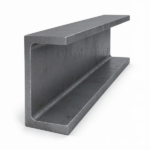
Parallel flange channels
Parallel flange channels, commonly called PFC sections, feature a C-shaped profile.
They are widely used where a lighter structural member is required or where they form part of a larger structural assembly.
Typical applications include:
- secondary framing,
- edge members,
- equipment supports,
- stair structures,
- platforms,
- bracing systems.
Channels can also be combined in pairs to create more complex structural members.
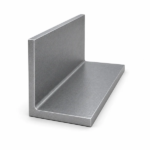
Equal steel angles
Equal steel angles have two legs of identical length joined at a right angle.
They are among the most versatile structural profiles available and are commonly used in both construction and general fabrication.
Applications include:
- structural bracing,
- support frames,
- connection details,
- equipment supports,
- reinforcement,
- fabricated steel assemblies.
Equal angles are valued for their simplicity, availability and ease of fabrication.
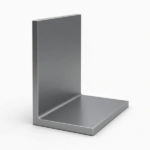
Unequal steel angles
Unequal steel angles are similar to equal angles but feature legs of different lengths.
This asymmetrical design allows engineers to tailor the section more closely to specific structural requirements.
Typical uses include:
- structural supports,
- connection plates,
- reinforcement,
- transmission structures,
- industrial steelwork,
- specialist fabrication.
Although visually similar to equal angles, unequal angles behave differently under load and should never be substituted without engineering approval.
Flat bars
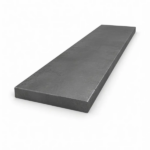
Flat bars are one of the simplest steel products used in construction.
Despite their straightforward appearance, they play an important role in structural fabrication and finishing work.
Common applications include:
- base plates,
- connection plates,
- stiffeners,
- brackets,
- fabrication components,
- reinforcement,
- support details.
Flat bars are also frequently used in manufacturing, engineering and metal fabrication beyond the construction sector.
Steel plates
Steel plates differ from structural sections because they do not have a rolled profile.
Instead, they are supplied as flat material in various thicknesses and can be cut, drilled, welded and fabricated into almost any required component.
Typical uses include:
- base plates,
- gusset plates,
- connection details,
- machine foundations,
- fabricated components,
- heavy engineering applications.
Steel plates are essential in virtually every structural steel project.
Which steel section is best?
There is no single steel section that is suitable for every application.
Each profile has been developed to perform efficiently under specific loading conditions.
For example:
- Universal beams are ideal for carrying bending loads.
- Universal columns perform exceptionally well under compression.
- Hollow sections provide excellent torsional resistance.
- Channels are effective for secondary structural members.
- Angles are widely used for bracing and connections.
- Flat bars are primarily used in fabrication and detailing.
The correct choice depends on structural calculations, loading conditions and the intended function of the element.
Strength depends on more than shape
Many people assume that the largest profile automatically provides the greatest strength. In reality, structural performance depends on several factors working together.
These include:
- steel grade,
- section dimensions,
- wall thickness,
- span,
- support conditions,
- connection design,
- applied loads,
- fabrication quality.
For example, two universal beams with identical external dimensions may have different load-bearing capacities if they are manufactured with different wall thicknesses or steel grades.
Choosing the right steel section
Selecting a structural profile should always be based on engineering calculations rather than appearance or price alone.
Professional designers consider:
- permanent and variable loads,
- structural stability,
- deflection limits,
- fabrication efficiency,
- transport requirements,
- installation methods,
- compliance with applicable standards.
Optimising the profile can reduce material consumption while maintaining safety and structural performance.
Steel sections and fabrication
One advantage of structural steel is its versatility during fabrication.
Most structural sections can be:
- cut,
- drilled,
- welded,
- bolted,
- galvanised,
- painted,
- fabricated into bespoke assemblies.
This flexibility allows steel to be used in projects ranging from simple support frames to highly complex industrial buildings.
Structural steel sections and sustainability
Steel remains one of the most sustainable construction materials available.
Structural sections can often be reused after demolition, and steel itself is one of the world’s most recycled materials. Efficient structural design also helps reduce material consumption by selecting profiles that provide the required performance with minimal weight.
These characteristics contribute to more resource-efficient construction and support circular economy principles.
Common mistakes when selecting steel sections
Several mistakes occur regularly during project planning.
These include:
- selecting a profile based only on appearance,
- assuming larger sections are always stronger,
- replacing one profile with another without structural approval,
- ignoring connection requirements,
- focusing solely on purchase price rather than overall project efficiency.
Every structural member should be selected according to engineering calculations and the project specification.
Summary
Structural steel sections are fundamental components of modern construction. Universal beams, universal columns, hollow sections, channels, angles and flat bars each serve different structural purposes and offer unique advantages.
Selecting the appropriate profile requires careful consideration of loading conditions, structural behaviour, fabrication methods and overall project requirements.
When combined with the correct steel grade and professional engineering design, these structural sections provide safe, durable and efficient solutions for projects of every size.
Frequently asked questions
What is the most commonly used steel section in construction?
Universal beams are among the most widely used structural steel sections because they efficiently support bending loads in floors, roofs and structural frames.
What is the difference between SHS and RHS?
Square hollow sections have equal side dimensions, while rectangular hollow sections have different width and height dimensions, allowing them to be optimised for specific loading directions.
Are hollow sections stronger than universal beams?
Not necessarily. Hollow sections and universal beams are designed for different structural purposes. Their suitability depends on the type of load, span and structural design.
Why are universal columns different from universal beams?
Universal columns are primarily designed to carry compressive loads, while universal beams are optimised to resist bending.
Can different steel sections be substituted?
No. Structural profiles should only be substituted if approved by the project engineer, as different sections have different mechanical and structural properties.